
Once Upon a Field
Choreographies of Play and the Heavy Borders of the Global Pitch.

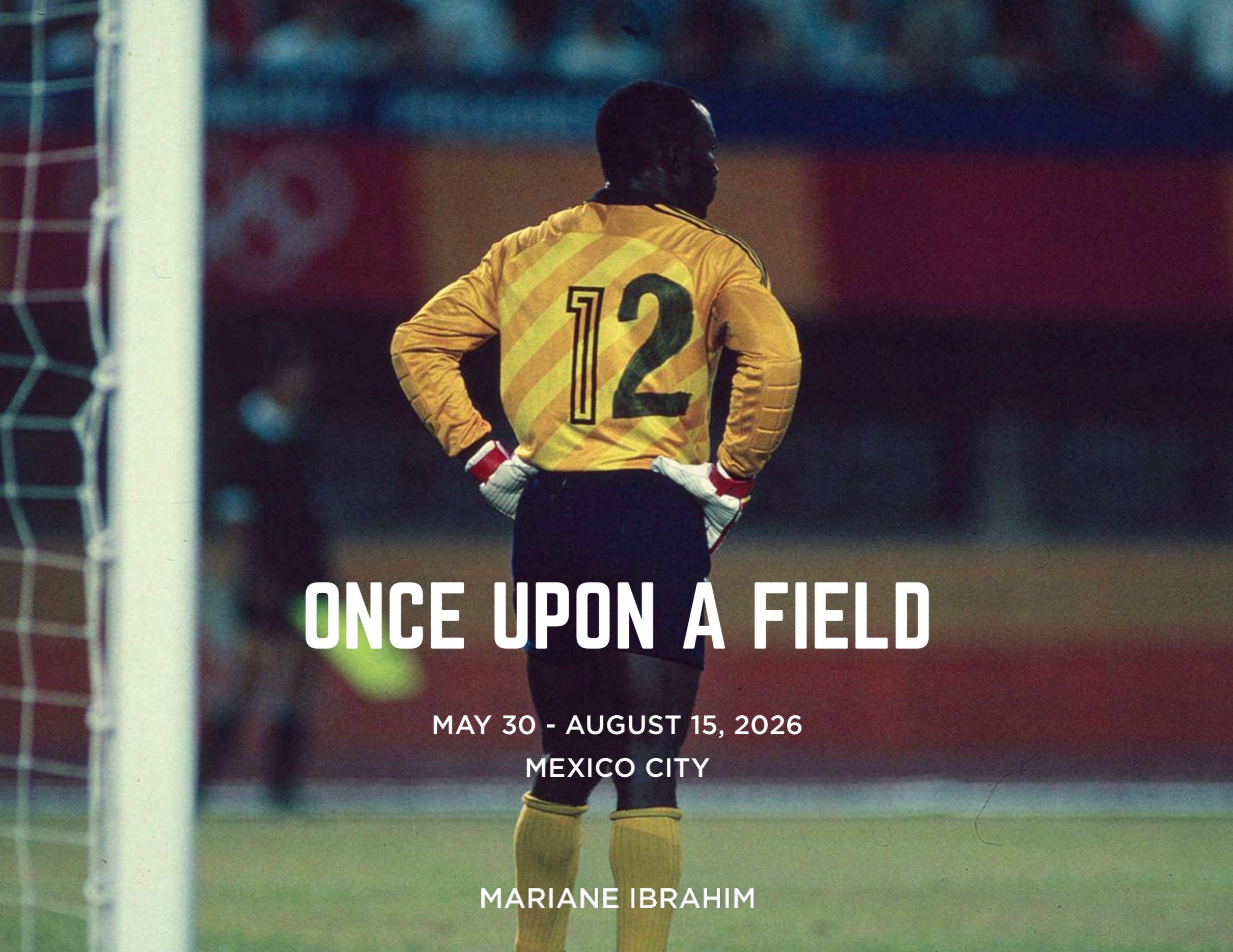
The deep, grounding symmetry of stepping into Mariane Ibrahim’s Mexico City gallery is difficult to overstate. As someone born in Canada with both Indian and Tanzanian roots, navigating fluid identity and cross-continental histories is second nature to me. Walking through her space, I always feel an immediate, quiet shock of recognition.

Mariane Ibrahim, who is Somali-French, occupies an incredibly rare and luminous position in the contemporary art market. She has spent her career completely redefining who gets to hold the pen of art history, championing artists from the African diaspora with an uncompromising sharpness, elegance, and intellect. Her presence is a masterclass in how institutional power can be built independently, with an editorial eye that values technical precision, structural mastery, and deep-seated cultural memory.
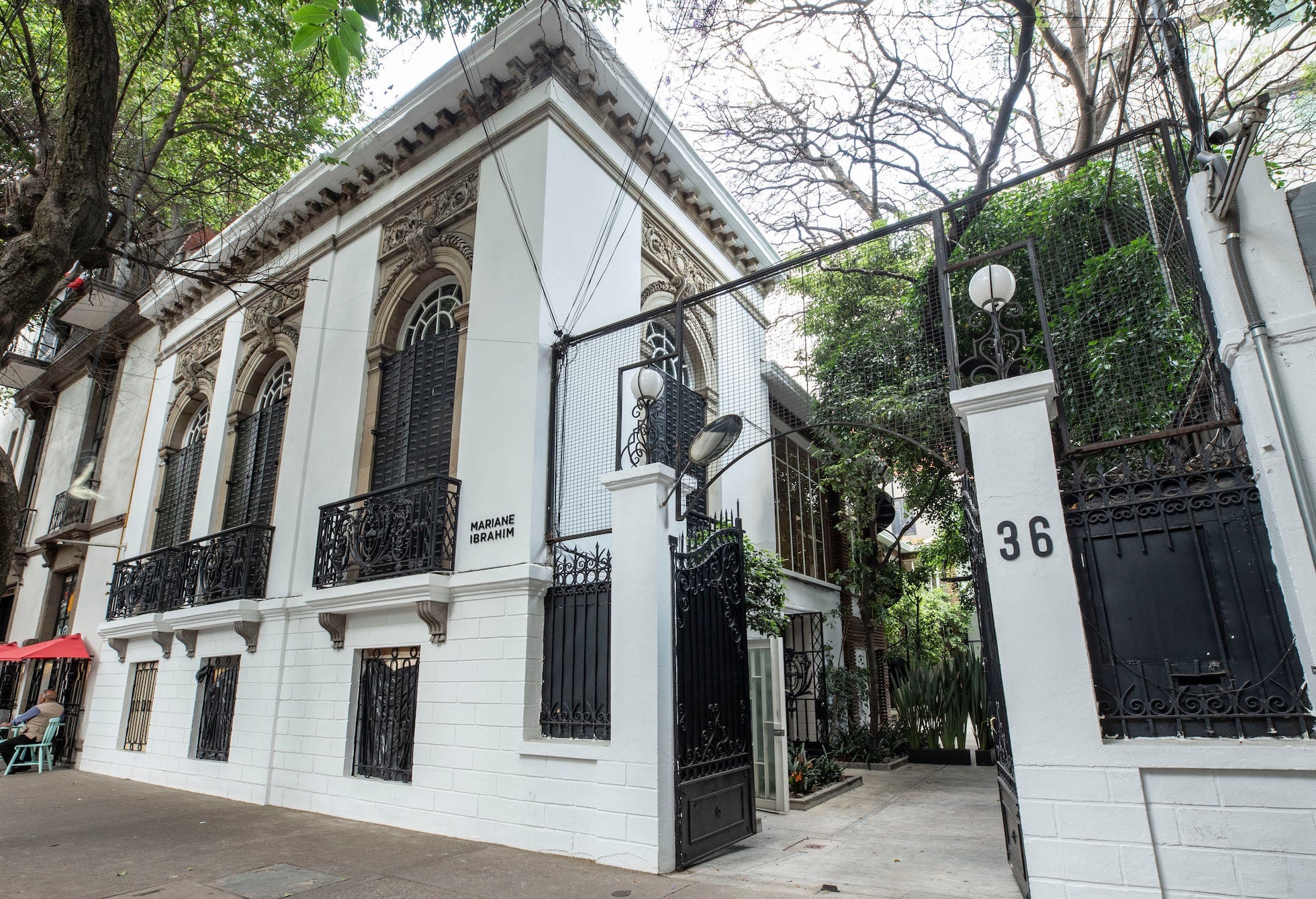
To experience her vision within her Mexico City home is to understand the dialogue she is intentionally weaving between the African continent and Latin America. Located on Río Pánuco in Cuauhtémoc, the gallery space is architectural poetry. It is a beautifully restored Porfirian villa that respects the historic bones of CDMX while creating a soaring, luminous interior where global contemporary narratives can breathe. The high ceilings, clean light, and delicate interplay of historic Mexican architecture with avant-garde African diasporic art feel intensely intentional. It provides a sanctuary where complex, high-stakes ideas can be handled with the absolute dignity they deserve.


The current exhibition, Once Upon a Field, uses the upcoming World Cup as a magnificent, shape-shifting lens to explore these themes. The title itself is a brilliant multilingual play on words: Once means eleven in Spanish—the eleven players on a pitch—while simultaneously evoking the classic narrative opening of a fairytale. Curated with a distinct sense of choreography, the show functions as a beautifully complex pitch where sport dissolves entirely into art, politics, memory, and migration. The spiritual coach of the entire exhibition is the master film director Abderrahmane Sissako, whose legendary film Timbuktu anchors the conceptual framework of the space.
In the excerpt shown, Sissako captures a group of young men playing an imaginary football match after the game itself has been strictly forbidden. The ball is entirely absent, yet their bodies continue to sprint, dribble, and celebrate.
This invisible ball becomes the defining metaphor running through the entire gallery: an insistence that the human impulse to play, resist, and imagine will endure even when the physical objects of that expression are stripped away.
That conceptual lightness, however, must coexist with the very real, heavy political shadows currently hanging over the world of football. As we think about the global stage of the game, we are forced to confront the harsh realities happening right outside the lines—the instances of photojournalists, photographers, and independent figures being detained, censored, or restricted as they attempt to document the truth of our global movements. This friction between public celebration and institutional containment is precisely where Once Upon a Field cuts deepest.


The exhibition does not shy away from these tensions; instead, it confronts them through historical and contemporary parallels. This friction is palpable in the historic photographs of Peter Robinson, whose lens famously captured Diego Maradona raising his fists at the Azteca Stadium moments after the “Hand of God” goal during the 1986 World Cup here in CDMX. Robinson’s frame holds the duality of the game perfectly: the ecstatic relief of Maradona contrasted with the furious, gesturing fans in the stands—a match played under the immense political weight of the Falklands/Malvinas War.


In the striking photographic works of Omar Victor Diop, the artist inserts contemporary football gear—gloves, cleats, and red cards—into meticulously staged portraits inspired by Baroque and historical European painting.
In Albert Badin, Diop holds a sharp red card against an aristocratic backdrop, using the visual vocabulary of the referee to mark the fragile, precarious threshold between belonging and immediate expulsion. It serves as a brilliant, haunting reminder that Black and Brown bodies are often granted access to spaces of immense prestige and visibility only under highly conditional, heavily policed rules. The red card becomes a symbol of how quickly power can swing to silence documentation, visibility, and autonomy.

Similarly, Raphaël Barontini’s textile masterworks, La Ginga and Alegria do Povo, ground the athletic gesture in deep histories of survival. Revisiting the legendary Brazilian dribbler Garrincha—who played with a severe physical precarity—Barontini connects the rhythmic evasion of the dribble to the ginga of capoeira, a martial art developed in the nineteenth-century quilombos by runaway slaves.
Here, the bodily movement of the player is recontextualized not merely as a sporting technique, but as a deliberate strategy to evade structures of racial segregation and the violent attacks of defenders that were so often ignored by the official referees. The field becomes a site where world history is actively contested.


This conversation between history and craftsmanship is further anchored by Tunisian artist Abdesslem Ayed in his work Handle. Drawing from his background restoring ancient sculptures at the National Museum of Bardo, Ayed uses embroidery on Maltese canvas to juxtapose fragments of classical statuary with a worn football reduced to an archaeological artifact. Through this technical precision, the ball ceases to be a commercial product of sport and becomes a material trace of conflict and memory.
Ultimately, Once Upon a Field at Mariane Ibrahim is a reminder of why we look at art to understand the world. It positions football not as an isolated spectacle, but as a mirror of global migration, systemic friction, and spiritual resilience. Even as institutional forces attempt to police the perimeter—detaining the eyes that document the game—the exhibition proves that the spirit of the play cannot be contained. Like Sissako’s players running across the sand without a ball, the choreography of resistance continues. The game remains entirely possible, even when they try to make the ball disappear.
HYPER FIXATED AS ALWAYS - XO AMY
If You Go: